Friday, April 8, 2011

Placentophagia

Oskar's and My Placenta, Steamed
In East Asian Medicine, human placenta is a healing post-partum tonic for both mother and nursing baby.
For the mother, the placenta provides nourishment on the order of restoring the qi and blood that was lost during birth. As such, taking the placenta can enhance lactation, uplift the spirit, and provide a new mother with some much-needed ballast.
For nursing babies, here is a rare and precious opportunity to boost their pre-natal jing. Pre-natal jing is the treasure and inheritance that people receive from their parents, and is therefore something that cannot be renewed or restored. We consume it continuously as we live our lives, and death comes to us once this store is spent.
Personally, Dan and I felt there was something very special about consuming the placenta. It represented the organ  that grew out of the powerful love that Dan and I had for each other, so powerful as to call forth and hold a new life. It represented the organ that provided an important, sacred boundary between Oskar and me; it both bonded him to me as well as shielded him from me during his forty-one weeks inside. Eating it was the most natural thing to do. It was also very exciting and sensational!
Here is the recipe Dan used in preparing the placenta. It is best for the placenta be prepared with intention and love.
1. Rinse the placenta;
2. Steam the placenta, with a hot pepper, slices of ginger, and a slice of lime in the water, over low heat for 15 minutes;
3. Turn it over and continue to steam for another 15 minutes;
4. After steaming, slice the placenta into thin strips;
5. Lay the strips on a baking sheet and place them in the oven on warm (lowest setting);
6. Dry the placenta strips until they are dehydrated enough to snap (about 8 to 10 hours);
7. Break the dry strips into smaller pieces and then grind them to powder with a mortar and pestle.
8. Consume daily, and store in a cool, dark place.
How did it taste?
To me, very gamey and primal.
I felt like a wild animal when I took my daily tablespoon dose.

When Injured: Tai Chi

Many of my patients who see me for sports-related issues ask me what they should do, if they shouldn't run/fight/bike/spin/weight train while recovering from injury, and my answer is always Tai Chi.
There is a living master in New York City, and his name is William C. C. Chen, and he is teaching beginner classes several days a week in his studio on 5th Avenue and 28th Street.

Herbal Tonics for Pregnancy

Following the amazing birth of Oskar, Dan thought I should write down everything I did while pregnant and spread the word, in the hope that it would help other women have beautiful birth experiences.
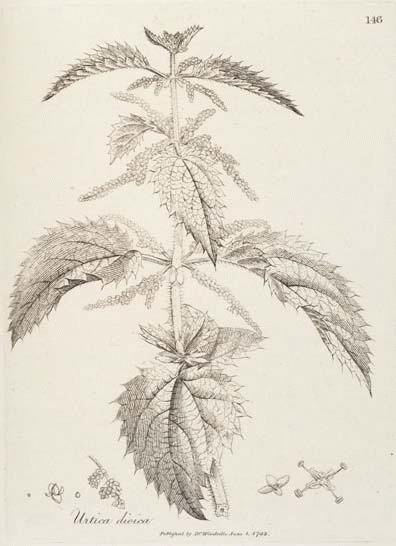
One thing that Dan helped me do throughout my pregnancy was to take herbal infusions of stinging nettle and red raspberry leaf often.
Stinging nettles infusions are great any time, and I had taken them for an overall boost to my stamina and to improve my sleep on the advice of my friend and fellow acupuncturist Therese.
Red raspberry leaf is a uterine tonic. Labor, as my midwife Kristen put it, is the process the uterus undertakes to organize itself for birth.
Here is how he made them:
We purchased them at Jean's Greens.
NETTLE LF (Urtica dioica) c/s (o)
1-8 oz. . . . $1.29/oz
9-15 oz. . . . $1.14/oz
1 lb. . . . $16.70/lb
RED RASPBERRY LEAF (Rubus ideaus) c/s (o)
1-8 oz. . . . $1.14/oz
9-15 oz. . . . $0.99/oz
1 lb. . . . $14.30/lb
Other things you need:
One Quart Glass Jar (we use a wide mouth mason jar)
Boiling Water
Steep one cup of dried herbs in a one quart jar filled with boiling water.
Cover and steep for 4-10 hours.
Strain.
Drink daily.
Refrigerate to store, and warm up to enjoy.
Here is a lovely instructional video from the magical Susun Weed:

The Breath

With breathing proceed as follows:
The breath should be held and it will be gathered.
If it is gathered, it becomes magic.
If it becomes magic, it descends.
If it descends, it quiets down.
If it quiets down, it solidifies.
If it is solidified, then it germinates.
If it germinates, it grows.
If it grows, it is attracted upward.
If it is attracted upward, it reaches toward the heaven.
In heaven, it ascends upward still.
At the lower end, it descends still.
Those who follow this will live, those who act contrary will die.
Lao Tsu, translated by Helmut Wilhelm

First Food

Oskar's pure diet of breast milk has been infiltrated by small amounts of bath water, flower essences, and (a larger dose of) nose. Some time in the coming weeks, we'll be introducing him to food. Although he's already had a first bite of banana ("It just happened," is how Dan describes it!), this will be the first time he's been fed with intention.
In East Asian medicine, the two primary choices for first food are rice porridge or millet porridge. The choice depends on whether or not the child would benefit from more heavenly or earthly influences. With rice, its fluffy whiteness is reminiscent of clouds, whereas millet is round and yellow like the earth.
We're going to start with rice for Oskar, because he is already plenty grounded and also because of the strong relationship between rice and his Korean heritage. His Danish half has not yet been able to mount a compelling argument for pork or butter, much less pork with butter.
The benefits of rice porridge are manifold: it can easily be digested and assimilated; tonifies blood and Qi; harmonizes digestion; and is demulcent, cooling, and nourishing. The longer it is cooked, the more potent its health-promoting properties.
Recipe: 1 part of white rice to 7 parts water cooked overnight in the rice cooker until the grains loose their form.